Where should plants grow?
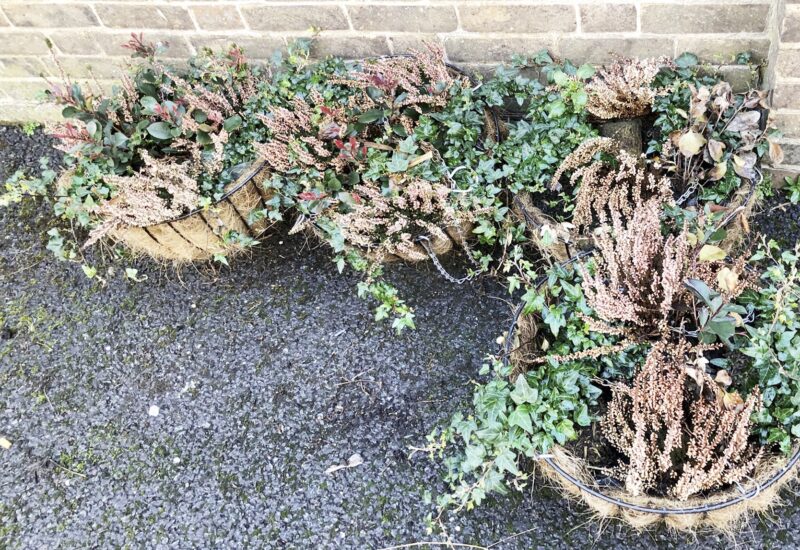
I have a problem with hanging baskets to display living flowers. First, they require planning and
planting at just the right time, then attaching to a secure bracket. Second, they are unnatural. A
typical selection of flowers has no business having their root system 2 – 3 metres above the
ground in compost that will dry out. Therefore, they require regular watering throughout the
summer.
There is a water shortage, so using potable water is an obscene waste of water when chalk
streams are drying up in Cambridgeshire. On the other hand, overwatering can cause root rot.
In Whittlesey, there has been a tradition of displaying colourful baskets for a few weeks each
year, a cost supported through our taxes by Whittlesey Town Council. Volunteers provided
watering for these displays using their own vehicles and water containers. The water supply
involved several ‘free’ taps; in recent years, a subsidised watering contract supported the
watering for much of the summer – although, in times of drought, more frequent watering was
required than a once-a-day session.
The generous volunteers can no longer give their time and compliance with modern working practices and risk assessments require aprofessional solution—this comes at a high cost, and there are few providers.
There is support for the colourful benefit to the town centre, but the only sponsor is Whittlesey
Town Council, which is spending our money. In these days of financial hardship for many in our
community, how can the cost of planting and suspending baskets that need frequent servicing
be justified—to make the street look pretty?
If flowers are planted in the ground, as they have evolved to do, and a planting regime suits
perennial flowering—it could be that sustainable flowering that relies on plants
finding their water would be sustainable—the saved money (which may be £20,000 or more)
could be used across a wider area, some made available for more deserving projects.